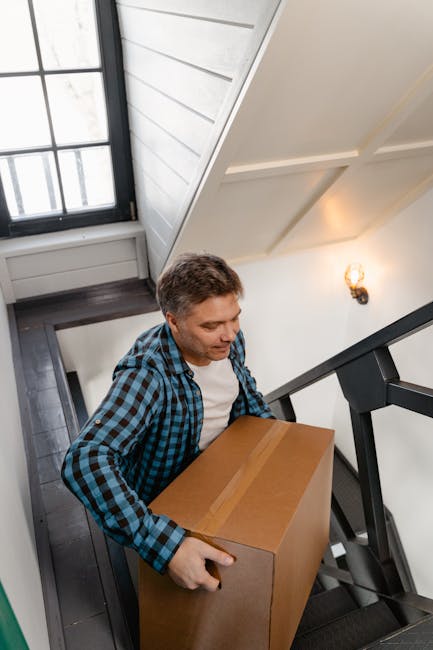
Neasden Lane flat moves: narrow-stair moving guide
Posted on 07/05/2026
Moving out of a flat with a narrow staircase can turn a simple relocation into a careful puzzle. On Neasden Lane, where flats often mean tight turns, shared entrances, awkward landings, and limited parking, the difference between a smooth move and a stressful one usually comes down to planning. This guide to Neasden Lane flat moves: narrow-stair moving guide breaks the process into practical steps so you can move furniture safely, protect your walls and belongings, and avoid the usual last-minute scramble.
Whether you are shifting a one-bedroom flat, moving a student room, or relocating bulky furniture from an upper floor, the same principles apply: measure properly, reduce load size, protect access routes, and work in the right order. If you want a broader overview of move preparation, it can help to read house-moving advice that keeps the whole day calmer alongside the guidance below.
Think of this as a practical field guide, not a generic moving checklist. Narrow stairs punish guesswork. A few minutes spent planning now can save you an expensive repair bill, a strained back, or an item stuck halfway down the stairwell while everyone stands there pretending not to panic.

Why Neasden Lane flat moves: narrow-stair moving guide Matters
Narrow-stair moves are not difficult because they involve more items; they are difficult because they reduce the margin for error. A sofa that would be manageable through a wide hallway can suddenly become a problem on a staircase with a tight bend, a low ceiling, or a shared landing. On Neasden Lane, that matters because many flat moves involve older layouts, compact access points, and street-side logistics that need to be handled sensibly.
The goal is not just to move things out of the property. It is to move them out without damaging the walls, door frames, banisters, or the item itself. The same is true when you are dealing with delicate or heavy belongings such as mattresses, wardrobes, or even a piano. For specialist items, it is often worth reviewing why DIY piano moving often goes wrong before assuming a large item can be carried the same way as a box of books.
There is also a time factor. Tight stairs usually mean slower handling, more pauses, and more opportunities for blocking communal access. That affects neighbours, building rules, and your own schedule. A planned approach reduces stress for everyone involved.
Key point: narrow-stair moves are won before moving day begins. If you have measured, packed intelligently, and prepared the access route, the physical move becomes much more controlled.
How Neasden Lane flat moves: narrow-stair moving guide Works
A narrow-stair move works by breaking the job into smaller, safer decisions. The first is assessing what can physically fit through the stairwell. The second is deciding what needs dismantling. The third is choosing the order in which items leave the flat so that the largest or most awkward pieces do not get trapped behind smaller ones.
In practice, this usually means a pre-move survey or at least a careful visual check. You measure key pinch points: the width of the staircase, the tightest turn, any radiator projections, the distance between handrails, and the height at landing corners. These details matter more than people expect. A wardrobe can be too wide by only a few centimetres and still become impossible to rotate safely.
The loading process itself is usually more efficient when the team uses controlled, short movements rather than trying to rush. On stairs, movement is about balance and communication. If you want a plain-English explanation of the physical side, this guide to kinetic lifting is a useful companion piece.
For many flats, the best approach is:
- clear the stairwell and hallway first
- protect the route with covers or padding
- move boxed items before large furniture only if it keeps the route uncluttered
- carry one awkward item at a time
- check the route again before each major lift
That may sound obvious, but the obvious steps are often the ones people skip under pressure.
Key Benefits and Practical Advantages
The biggest benefit of planning a narrow-stair flat move properly is simple: fewer surprises. Once you know what fits, what must be dismantled, and what needs extra protection, the whole move becomes less reactive.
Some of the practical advantages include:
- Less risk of damage: to furniture, walls, bannisters, and floors.
- Better time control: the move is paced instead of improvised.
- Lower physical strain: fewer dangerous lifts and awkward twists.
- Cleaner shared spaces: especially important in blocks with communal access.
- Smarter packing: items are handled in an order that supports the route.
There is also a hidden benefit: you tend to unpack better. When a move has been organised around access and item size, your boxes are more likely to be labelled, grouped, and placed logically at the destination. That makes the second half of moving day far less chaotic.
If you are trying to save time and reduce the number of boxes, the article on packing hacks that save time and space is a strong practical follow-up.
Who This Is For and When It Makes Sense
This guide is most useful if you are moving from a flat with restricted access, but it applies more widely than that. It is relevant if you live in a converted building, a maisonette, a top-floor flat, or any property where the staircase feels more like a squeeze than a route.
You will likely benefit from this approach if you are:
- a renter leaving a compact flat on Neasden Lane
- a student moving in or out of shared accommodation
- relocating with bulky furniture that cannot be carried flat-packed
- moving without a lift and with only a narrow internal staircase
- trying to avoid calling in emergency help on moving day
It is also sensible if you are comparing moving methods. For some jobs, a simple man and van arrangement is enough; for others, a more structured flat removals service in Neasden is the safer and more efficient choice. If you are still deciding what type of help you need, the services overview page gives a useful sense of the available options.
Truth be told, if you already know there is a tight corner between the second-floor landing and the front door, you should not leave the planning until the morning of the move.
Step-by-Step Guidance
The easiest way to handle a narrow-stair move is to work in stages. The sequence matters.
1. Measure the route before anything else
Measure the staircase width, the landing depth, and the height of the tightest turn. Also check door widths, corridor pinch points, and any awkward fixtures such as lights, shelves, or banister rails. Write the numbers down. Memory is not a measuring device.
2. Identify items that should be dismantled
Large furniture often becomes far easier to move once it is partially stripped down. Beds, tables, wardrobes, and shelving units are common candidates. If you need a dedicated reference, see how to move a bed and mattress efficiently before trying to wrestle a frame through a staircase it was never designed for.
Remove legs, shelves, drawers, loose handles, and glass panels where possible. Keep screws and fittings in labelled bags taped to the item or placed in a dedicated parts box.
3. Declutter before packing
Do not carry unnecessary weight up and down narrow stairs. Smaller loads are easier to control, and less clutter means fewer trips. A good decluttering pass can reduce the number of boxes and free up space for the awkward pieces. For a stronger pre-move reset, read decluttering tactics for a smooth transition.
4. Pack for handling, not just storage
Boxes should be sized for lifting, not just for maximum capacity. Small to medium boxes are usually better on stairs because they are easier to balance. Heavy items go into smaller boxes. Light but bulky items can go in larger ones. If you are unsure how to organise the load, the local guide to packing and boxes can help you choose the right materials.
5. Protect the route
Use floor runners, corner guards, moving blankets, or cardboard protection for walls and banisters. If the stairwell is painted or has narrow plaster corners, a single scrape can be more annoying than the actual move. Protecting access is cheaper than repairing it later.
6. Move the biggest items first, if the route allows it
There is no universal rule here. In some flats, it is best to remove the largest item first because it gives you the clearest path. In others, you may need to remove lighter items first to create room for manoeuvring. A good mover will judge this on the day rather than forcing one formula.
7. Keep communication simple
When two people are moving a bulky item, the person at the lower end often cannot see the whole route. Short, clear instructions work best: "stop," "tilt," "turn," "pause." Long explanations on a staircase are rarely helpful.
8. Check the final sweep before leaving
Once the load is out, do a last walk-through of the flat, stairwell, and landing. Look for dropped screws, packing tape, scuffs, and forgotten items in cupboards or behind doors. If you want a smoother exit, pre-move cleaning guidance is worth a read before handover day.
Expert Tips for Better Results
Small adjustments make a big difference on narrow stairs. The following tips are the ones that usually separate a manageable move from an exhausting one.
- Use the right grip: hands should stay under control points, not on loose edges or decorative trims.
- Keep weight close: the further an item sits from your body, the harder it is to balance.
- Rotate early, not late: if a turn is coming, start the angle before you hit the corner.
- Pause at landings: use the landing to reset your stance and check the route.
- Protect soft furnishings properly: mattress bags, blanket wraps, and stretch wrap help prevent snagging.
- Do not overpack boxes: even a strong box can fail if the contents shift while you are on stairs.
For physically demanding lifts, it also helps to understand how balance, foot placement, and core engagement work together. The article on solo heavy object lifting is a useful reminder of what not to rush. And if you want a deeper explanation of safe movement mechanics, mastering kinetic lifting offers a clear complementary perspective.
A calm pace is usually faster than a rushed one. That sounds backwards until you try hauling a wardrobe around a landing corner and realise everyone's nerves are the real obstruction.
Common Mistakes to Avoid
Most problems in flat moves come from assumptions. The staircase looks wide enough. The sofa will "probably" fit. The boxes are only a bit heavy. On moving day, "probably" is a risky word.
Here are the mistakes that most often create delays or damage:
- Not measuring the stairwell accurately before booking or packing.
- Leaving dismantling until moving day when time and patience are already thin.
- Using oversized boxes that are difficult to tilt or carry safely on stairs.
- Ignoring shared-space protection in corridors and entrances.
- Trying to force furniture through instead of changing the angle or removing parts.
- Skipping communication between the people carrying the load.
- Forgetting how the item comes back together because fittings were not labelled.
Another common issue is underestimating awkward appliances. Freezers, for example, are not just heavy; they can be awkward to tilt and store between moves. If you need to put one away for a while, read how to store a freezer efficiently so it stays in good condition.
One more thing: if an item is close to the limit of what can be safely carried, that is usually the moment to seek professional help, not the moment to "have one last go."
Tools, Resources and Recommendations
You do not need a warehouse of gear, but the right tools make narrow-stair moves much easier. A good toolkit usually includes:
- strong moving boxes in mixed sizes
- packing tape and tape dispenser
- marker pens and labels
- blankets or furniture pads
- stretch wrap for drawers and soft surfaces
- door-frame and corner protection
- gloves with decent grip
- basic tools for dismantling furniture
- ratchet straps or tie-downs for the van
- sliders or dollies where floor space allows them
If you are moving a sofa or other bulky furniture, it may also be worth looking at sofa protection and storage guidance before transit. It is easier to keep upholstery clean than to remove stairwell dust from textured fabric later.
For readers planning a broader move, the local packing and boxes service in Neasden and the wider removal services in Neasden pages are useful next steps. If you need the full picture of what is available, the removals in Neasden page is a good place to compare options.
Practical summary: the right tools do not replace judgement, but they reduce strain, protect the property, and help the move stay on schedule.
Law, Compliance, Standards and Best Practice
For a domestic flat move, the key legal and practical issues are usually around safety, access, and care. You should follow reasonable manual-handling practices, avoid blocking communal areas longer than necessary, and respect any building rules that apply to shared entrances, lifts, or stairwells. If you live in a managed block, check whether there are booking rules for move times or requirements for protective coverings.
Good practice also includes:
- checking whether parking arrangements are needed for the removal vehicle
- protecting common areas and leaving them clean
- using suitable lifting techniques and team coordination
- making sure items are insured appropriately during transit where applicable
- being honest about access difficulty so the move team can prepare properly
If you are hiring help, it is sensible to review the provider's policies on safety and responsibility. Pages such as health and safety policy, insurance and safety, and terms and conditions help you understand how a reputable company approaches risk and customer care.
For broader trust and service information, you may also find the about us page and pricing and quotes useful when comparing providers. If access is difficult and you need urgency, a same-day removals option in Neasden may be worth considering, but only if the route and item list have been checked properly first.
Options, Methods and Comparison Table
There is more than one way to handle a flat move with narrow stairs. The best choice depends on the size of the load, your budget, and how much risk you are willing to take on yourself.
| Method | Best for | Pros | Limitations |
|---|---|---|---|
| DIY with friends | Small loads, flexible timing | Lower upfront cost, simple to organise | Higher risk of damage or injury, less control on stairs |
| Man and van | Light-to-medium flat moves | Practical, cost-effective, useful for short local moves | May not suit oversized furniture without planning |
| Full flat removals service | Bulky items, tight access, multiple rooms | More structure, better handling, often less stress | Usually costs more than DIY |
| Storage plus staged move | When timing or access is awkward | Good for phased relocations and renovation gaps | Extra coordination and storage cost |
If your flat contains items that are unusually heavy, fragile, or awkwardly shaped, a dedicated service is often better than improvised lifting. For furniture-specific support, see furniture removals in Neasden or the broader man with a van in Neasden option depending on the size of the job.
And if you need temporary holding space between keys, the storage in Neasden page is worth reviewing. Split moves are sometimes the smartest answer when stair access is tight and timing is messy.
Case Study or Real-World Example
Here is a realistic example based on a typical Neasden Lane flat move. A tenant in a second-floor flat needed to move out before the weekend. The stairwell had a tight turn at the first landing, a narrow front door, and limited room outside for staging items. The main challenge was a double bed frame, a mattress, a bookcase, and several mid-sized boxes.
Instead of carrying everything out as it was, the move was organised in this order:
- The flat was decluttered and small loose items were packed first.
- The bed frame was dismantled and the mattress bagged for protection.
- The bookcase shelves were removed and wrapped separately.
- Walls and corners were protected at the stairwell entry points.
- Boxes were carried in a sequence that kept the landing clear.
The result was not dramatic, and that was exactly the point. No damage to the property, no item stuck in the stairwell, and no frantic second trip to dismantle furniture halfway through the day. A small amount of planning prevented a large amount of stress.
That is the real lesson with narrow-stair moves: success often looks boring from the outside. Everything simply goes as it should. In removals, boring is beautiful.
Practical Checklist
Use this checklist in the days before moving.
- Measure the staircase, landings, doorways, and any tight corners.
- Decide which items must be dismantled.
- Book parking or access arrangements if needed.
- Declutter before you pack.
- Gather boxes, tape, markers, covers, and tools.
- Label boxes by room and priority.
- Protect floors, walls, and banisters.
- Keep one small box for screws, keys, and essential documents.
- Arrange help for the heaviest items.
- Confirm insurance, service details, and timings with your mover.
- Check the old flat after everything is out.
- Set aside cleaning supplies for the final sweep.
If you want to go a step further, use this alongside a sensible move plan from this house-moving guide so the rest of the day stays organised too.
Conclusion
Narrow-stair flat moves on Neasden Lane are manageable when you treat them as a planning exercise first and a lifting exercise second. Measure the route, reduce the load, dismantle what you can, protect the access points, and choose the right moving method for your situation. That combination lowers the risk of damage and makes the move feel far less chaotic.
If you are moving furniture, dealing with awkward access, or deciding between DIY and professional support, the safest choice is usually the one that matches the route, not the one that sounds quickest on paper. A careful flat move is rarely glamorous, but it is far more satisfying than wrestling with a sofa at 4:30 in the afternoon while everyone is losing patience.
If you are planning a local move and want practical support, compare your options early and ask the right questions before moving day arrives.
Get a free quote today and see how much you can save.